What Is Reality?

posted in: science 0

My vision is all foggy right now, from having my pupils dilated by the eye doc.* That makes it hard to do any real work, so I decided to use the first hour of my enforced leisure to… well, leiszh, as Julia put it. I checked the DVR and saw that it had recorded the first episode of a new science show called Stephen Hawking’s Grand Design. This episode was about the meaning of life. (Which we all know is 42, but never mind that.)
*That’s no longer true, but it was true when I started writing this.

Now, my admiration for Stephen Hawking as a physicist and science communicator knows few bounds, and I was as geek-happy as anyone when he made his appearance in Star Trek: the Next Generation. But I wonder if he oversteps his area of wisdom when he speaks as a philosopher. In fact, in the opening to the show, he makes the statement, “Philosophy is dead.” Because physics killed it. Because everything in the universe is defined by physics, so (he implies) the soft disciplines need not apply. Strong statement. Does he support it? He tries. His approach is unabashedly reductionist. 

The show went on with a moderately interesting overview of all of the ways physics rules. Lots of pretty graphics, and nothing you don’t already know. I started to feel that I was listening to Sheldon Cooper of Big Bang Theory discourse on the supremacy of theoretical physics. Having established that physics rules over everything from quarks to the cosmos, Hawking proceeds to ask whether free will really exists. How can it? he asks, when our impulses and actions are governed by physics, when our actions and even our feelings can be influenced by electrodes in our brains, giving only the illusion of our own control. Ah, but what about chaos and unpredictability? Does that allow free will, or at least explain our perception of it? I don’t think he gave us a yes or no—or if he did, it was while I was in the kitchen getting a slice of pizza.

I kept waiting for him to bring quantum uncertainty into the question, but that never came up. That surprised me, because from a mechanistic, physical point of view, quantum uncertainty seems to be an elephant in the room in any discussion of free will. If we’re all just a collection of particles behaving according to physics, what does it mean if we fundamentally cannot predict or even measure completely the behavior of an individual particle? Perhaps a topic for another time, but it felt like an odd omission to me. Still, that wasn’t my problem so much as his assertion that particles and firing neurons are the sole explanation of consciousness and mind. Do I object to it as a hypothesis? No. But is it fact, scientifically provable fact? Of course not. We’re far from being able to prove such a thing. I doubt we ever will. In fact, I don’t even think it’s true. (That’s a personal opinion, not a scientific assertion.) 

Hawking avoids any discussion of God or spiritual dimension, though it’s easy to infer that he simply regards these matters as outside the bounds of reality. He does talk, though, about differing subjective views of reality. He offers the charming example of a fish peering out through a distorting fishbowl (or a guy peering through foggy vision?). He goes on to say that it’s entirely possible that we’re all just code running inside a gigantic, cosmic computer. How would we know? (But wait—wouldn’t that, if true, render moot all of the previous discussion of physics controlling everything?)

It comes down in the end, he says, to finding the “best fit” among models of reality. What model “best fits” the evidence? Fair enough. But it seems to me that that’s where his physics and his philosophy get tangled up. His best fit seems to include “scientific” assertions that really haven’t been proven by science, and probably can’t be. I’m thinking, maybe Hawking should stick to the physics he does so well, but not claim for it powers beyond its reach.

“We should take care not to make the intellect our god; it has, of course, powerful muscles, but no personality.” —Albert Einstein

The Industrious Richard Bowker

posted in: authors, ebooks, publishing 0

My friend Richard Bowker certainly is a busy fellow. He’s released two more of his novels, a thriller called Replica and a murder mystery called Senator, in the Kindle and Nook stores. I’ve read them both, and recommend them unreservedly. In fact, both went through the rigorous vetting and improvement process imposed by our writing group. Both are previously published. You can read some sample passages on Rich’s blog.

Replica 
(originally published by Bantam)

Senator 
(originally published by William Morrow)

While you’re looking, you might want to pick up his original-to-ebook novel Pontiff, currently on sale for $.99. I give this the same thumbs-up. Don’t be put off by its lack of a print edition. That was simply a dumb oversight on the part of the publishing industry. It’s good.

Pontiff $.99
Ebook original

Venus Video Montage

Mars shouldn’t get all the glory. I used to travel to both planets regularly in my head, via the great stories I read. One of my favorites, when I was about twelve, was the Tom Corbett Space Cadet book, Revolt on Venus.

Venus just made the last transit across the face of the sun that will be visible from Earth this century. Here’s a lovely montage of video images in various wavelengths taken and edited together by NASA. Who says NASA has no poetry in its soul? You can make it full screen for best effect.

View on youtube

And just for fun, here’s a time-lapse shot from the last transit, in 2004, showing the International Space Station and Venus making a transit across the face of the sun, almost as if in formation.

Ray Bradbury, SF Master (1920 – 2012)


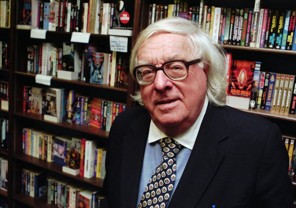
Ray Bradbury, the last of the Big Four in science fiction, died today. Over the years we’ve lost Robert A. Heinlein, Isaac Asimov, Arthur C. Clarke, and now Ray Bradbury. We’ve lost many other great writers, of course, but few would argue with placing those four at the top in their influence on the literature, and influence on young writers. It’s like the passing of a Great Age in Middle Earth.

Bradbury was a master of the short form, and probably the first acknowledged science fiction writer to gain the respect of the mainstream literary world. (Probably because he was at heart really a fantasist more than an SF writer. He was also a remarkable stylist.) Did your high school literature book have any science fiction In it at all? If it did, it was probably by Ray Bradbury. “The Pedestrian,” maybe. Or “The Veldt.”

He wrote for the screen, as well. I’d been a fan of his fiction for many years before I discovered that he’d written the screenplay for the 1956 John Huston-directed adaptation of Moby Dick, with Gregory Peck and Richard Basehart.

I was one of probably thousands of young writers who found both encouragement and frustration in reading his work. (My favorites: The Martian Chronicles and Something Wicked This Way Comes.) The encouragement is from the delight in reading his visions. The frustration is from the illusion he cast that it was all so easy. He really made storytelling look simple. And that is a mark of a master. I never knew him personally, though I saw him a few times at Nebula Awards events. The last time, I think, was when I saw him accept his SFWA Grandmaster Award in… you know, I don’t remember the year or the city, but I can see him inching his way up to the stage, with the assistance of his son, as though it were yesterday. Edit: I also remember that he had a sense of humor about his infirmity. When he finally got to the microphone, his words were, “Do you ever have the feeling that everyone’s watching you?”

There’s a fine remembrance at the Washington Post, and all kinds of interesting details on his Wikipedia page

Godspeed, Ray Bradbury!

We’re Doomed!

posted in: astronomy, science, space 0

Scientists have confirmed: the Andromeda galaxy (M31) is on a collision course with our own Milky Way galaxy. When the centers of the two galaxies collide, or even shear past each other if it’s a near-miss, there’s going to be an awful lot of cosmic smacking around happening. Eventually the two galaxies will probably merge, turning two beautiful spirals into a huge elliptical blob. It’s hard to say what will happen in our corner of the action, about two-thirds of the way out from our galactic center. It’s possible that it’ll just be a mind-blowing light show. But I’m not counting on it.
This could happen in the next four billion years. We’ve still got time to pack. But we’re fools if we don’t get working on that star drive right now.
Here‘s an artist’s conception of what it might look like, mid-tango. See it bigger at Astronomy Picture of the Day. And see what the stages of the collision might look like here, where you can also read more about it.
Seems to me there should be a good science fiction story in this. Probably more than one.

Audiobooks!

Great news from my agent —nine of my novels are being signed to become audiobooks! I am excited. I’ve been wishing for this ever since I became hooked on listening to audiobooks myself. This package does not include my Chaos Chronicles book, and won’t affect our homebrew full-cast audio production of Neptune Crossing (still in the “we hope to get started again realsoonnow” stage). It does include most of the Star Rigger books and several of my standalone novels. Nothing’s ever final until the contracts are signed, of course, so I should probably hold off on more specific details until things are official.

My own love affair with audiobooks started when I discovered you can download them for free from the public library and listen to them on your favorite MP3 player (a Zune, in my case). I love listening to books while walking the dog, which I do for at least an hour every day. I’ve been listening to a lot of books outside my own genre, books I’d never find time to sit down and read, even as ebooks carried in my pocket. I started with Robert Parker mysteries, and moved on to some thrillers. I’ve learned that the voice of the narrator makes an enormous difference even with a good book. (With a bad book, it just makes it harder to decide when to give up.) In some cases, I’ve stumbled onto some fine listening simply by looking for other books read by a narrator I like. Here are some of my recent favorites:

  • The Jack Reacher series, featuring a retired MP turned wanderer, by Lee Child (read by Dick Hill)
  • Cold Choice, a well-crafted and realistic submarine thriller by Larry Bond (read by Dick Hill)
  • The Myron Bolitar series, featuring a pro sports agent who sidelines as a detective, by Harlan Coben (read by Jonathan Marosz) [The last couple in the series were narrated by other readers, including the author. Not even in the same universe.]
  • Leviathan, Behemoth, and Goliath—a young adult, alternate history, SF series by Scott Westerfeld (read by Alan Cumming) [This one the library only carried on CD.]
  • Ender’s Game, the SF classic, by Orson Scott Card (read by Stefan Rudnicki, with Gabrielle De Cuir and David Birney, Scott Brick, Jason Cole, Harlan Ellison, Christian Noble, Don Schlossman, M.E. Willis and Orson Scott Card) [Ditto, on CD.]

What are your favorites?

Book View Café Grand Reopening

I’ve just joined Book View Café, which is an authors’ cooperative filled with great authors helping each other to republish their backlists and get excellent books back into print, via ebook. Members include Ursula K. LeGuin, Vonda N. McIntyre, Linda Nagata, Judith Tarr, Pati Nagle, Patricia Rice, and lots more. It’s a little like Backlist eBooks, which I also belong to, but is a lot more hands-on with the actual publishing, with its own bookstore and members actually volunteering cooperative-style, to help build the books, design covers, etc. My own books will start appearing there over the coming months, with my official “launch” on June 19 to feature the first of my forthcoming short story collections.

These hard-working people have just completely redesigned the bookstore, and today marks the official grand opening. Complete with a contest to give away some free books! Here’s the announcement…

Book View Café is celebrating the opening of our new, completely-redesigned bookstore by giving our readers a chance to win the book of their choice free. Just take a look around the store anytime up until midnight, June 8, and choose the book you’d like—all the books that are eligible for the giveaway are marked with a gold star. Then come back here and leave a comment with the name and author of the book and why you want it (we may use that comment for publicity purposes). You can also leave comments on any of the author blogs listed on the promotions page. When the promotion ends, winners will be chosen, and free books passed out! Check out the celebration here!

It’s a great bookstore, so do stop by and browse. All ebooks in the store are DRM-free and available in multiple formats for Kindle, Nook, and pretty much all other ebook devices.

When Mining Asteroids, Don’t Forget Your Trusty Dog

The recent arrival of the privately designed-and-built Dragon space capsule at the International Space Station dovetails nicely with another recent event: the announcement of a privately funded initiative called Planetary Resources, Inc., to seek out and mine near-Earth asteroids.

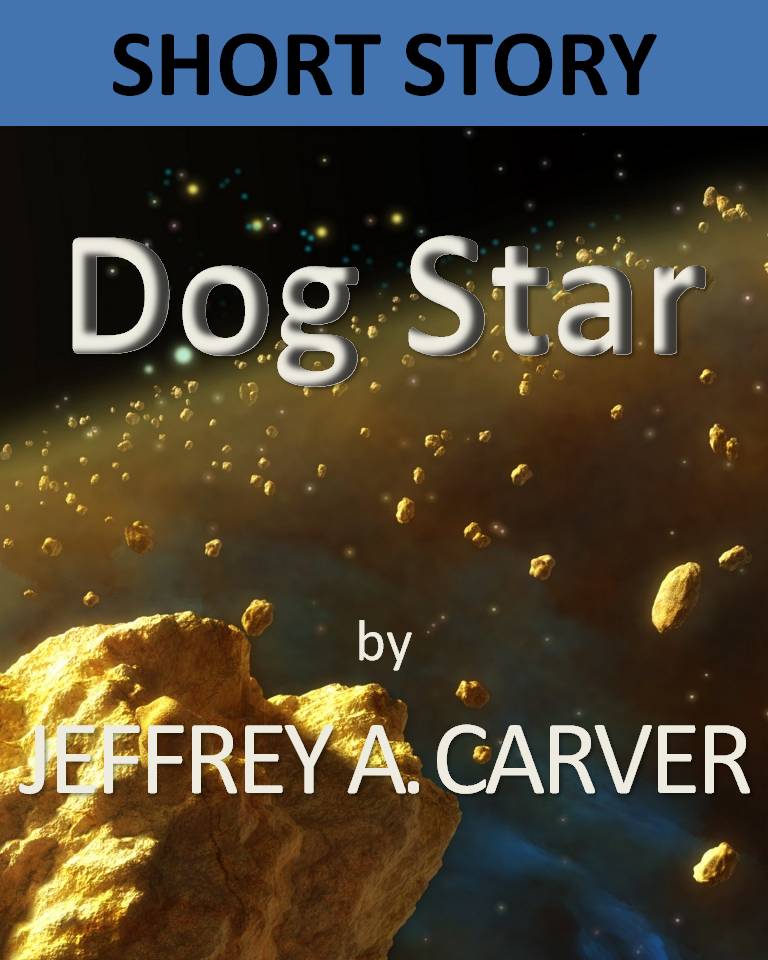
Both dovetail nicely with my own initiative: the release of my short story “Dog Star” as a standalone ebook. The dovetailing has to do with the fact that “Dog Star” is about a young asteroid miner who finds himself grounded on just such as asteroid, just him and his disabled ship… and his trusty “smartmutt,” an enhanced border collie named Sam. Dogs who can discuss astrophysics with you while thinking about digging on an asteroid aren’t a dime a dozen even in this future. Sam has to prove his mettle while helping his human dig his way out of this life-threatening jam.

This is a reprint of a story that first appeared as part of an online science-oriented anthology of stories called Diamonds in the Sky, which was funded by the National Science Foundation to help further the cause of science education, particularly in astronomy. (This new release has a couple of minor corrections from the text as it was released in the anthology.)

Gretchen, the student who has been working with me, helped get “Dog Star” up for sale on the last day of her interning stint. (Thanks, Gretchen!) It’s now free at Smashwords, and you can also get it in the Kindle and Nook stores.

Kindle | Nook | Smashwords (free!)

“Dog Star” will also appear in my forthcoming short story collection, Reality and Other Fictions, which is rapidly moving toward completion. I hope to make an announcement about that in the next few weeks. It will contain about half my published stories, including a couple not released as standalone ebooks. The other half will follow in Going Alien, soon after.

The Dragons Return!

My short story “Though All the Mountains Lie Between” was the spark that led to two novels, Dragons in the Stars and Dragon Rigger. Those books have been back in ebook form for a while now, and I even gathered them into a low-cost set, Dragon Space: A Star Rigger Omnibus. But the short storyoriginally published in The Science Fiction Times and the anthology Dragons of Darkness, edited by Orson Scott Cardhas been out of circulation for many years. With Gretchen’s help, I’ve now amended that situation. Give it up for “Though All the Mountains Lie Between” the ebook!

It’s available in the usual suspect places, and will eventually migrate to even more stores. Just $.99 at Kindle and Nook, and free at Smashwords! It includes a preview chapter of Dragon Space.

1 88 89 90 91 92 93 94 150